
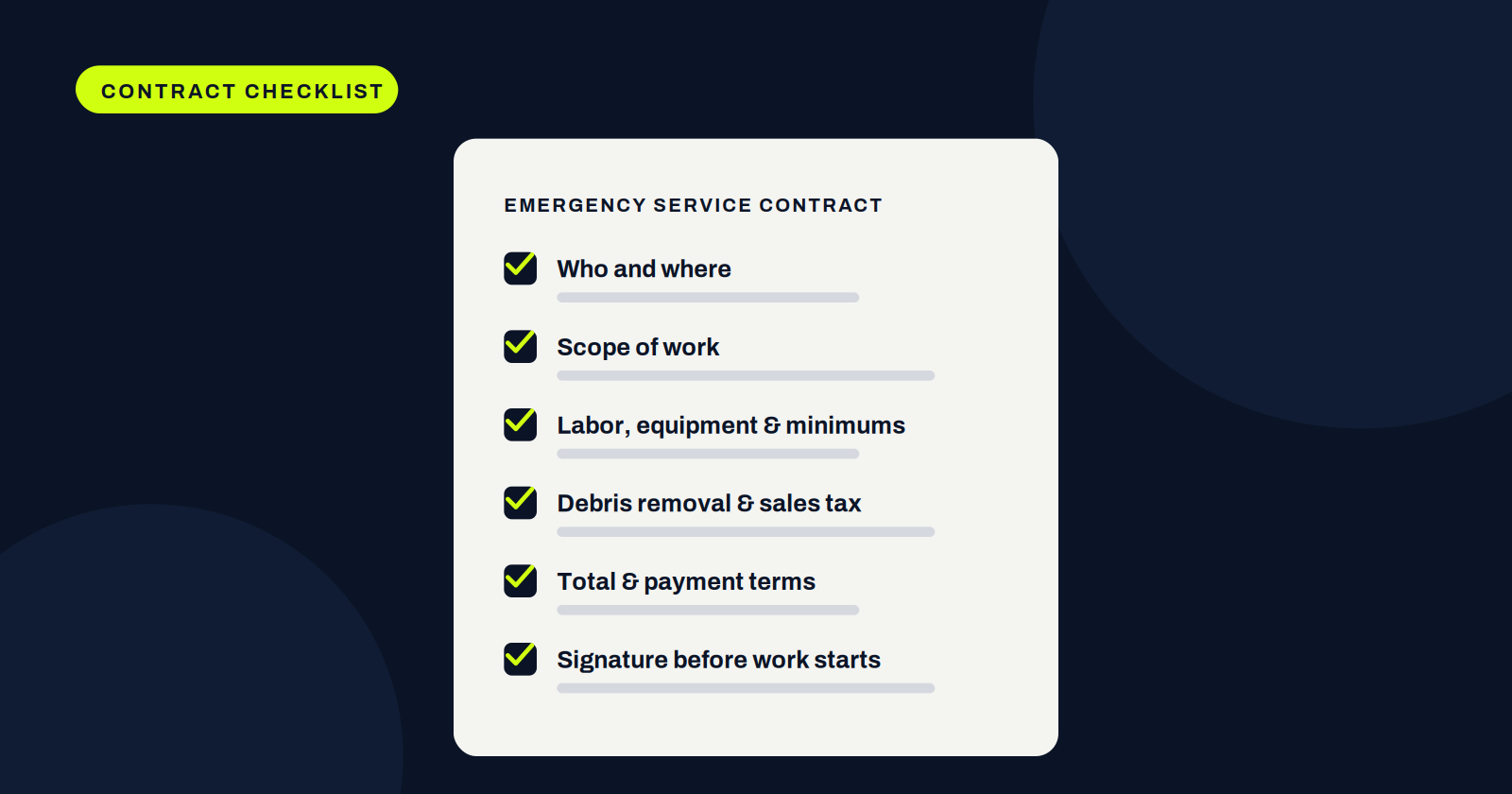
An emergency tree job moves fast, which is exactly why the contract matters. A clear contract protects your company, sets expectations with the homeowner, and gives you something solid to stand on if a payment or insurance question comes up later. This isn’t legal advice, and you should have your attorney review your contract, but here’s what a strong emergency tree service contract usually covers.
Who and where
The customer’s name and contact information, your company’s information, and the property address where the work is being done.
The scope of work
A plain-language description of the job: which trees, what’s being removed, whether stumps are included, and what isn’t included.
Labor, equipment, and minimums
The labor and equipment being used, the rates, and any minimum charges, such as a 4-hour or 8-hour minimum. Spelling out minimums up front prevents surprises on the final bill.
Debris removal and sales tax
Each as its own line, so the customer can see exactly what they’re paying for.
The total, and that it’s an estimate
The all-in estimated cost, plus how the final price is determined if the job takes longer or needs more equipment than expected.
Payment terms and insurance
When payment is due, how it can be made, and how insurance claims are handled. If you bill insurance carriers directly, this section deserves extra attention from your attorney.
Property access and site conditions
Permission to access the property and bring in equipment, and how you handle things like lawn damage from heavy equipment or hidden hazards.
Signatures
A signature and date from the customer before work begins. Electronic signatures make this possible even when the homeowner isn’t standing in the yard.
Keep it consistent
The best contract is the one you actually use on every job. StormOps™ sends your contract with every estimate automatically, so every emergency job gets signed before the crew starts.