
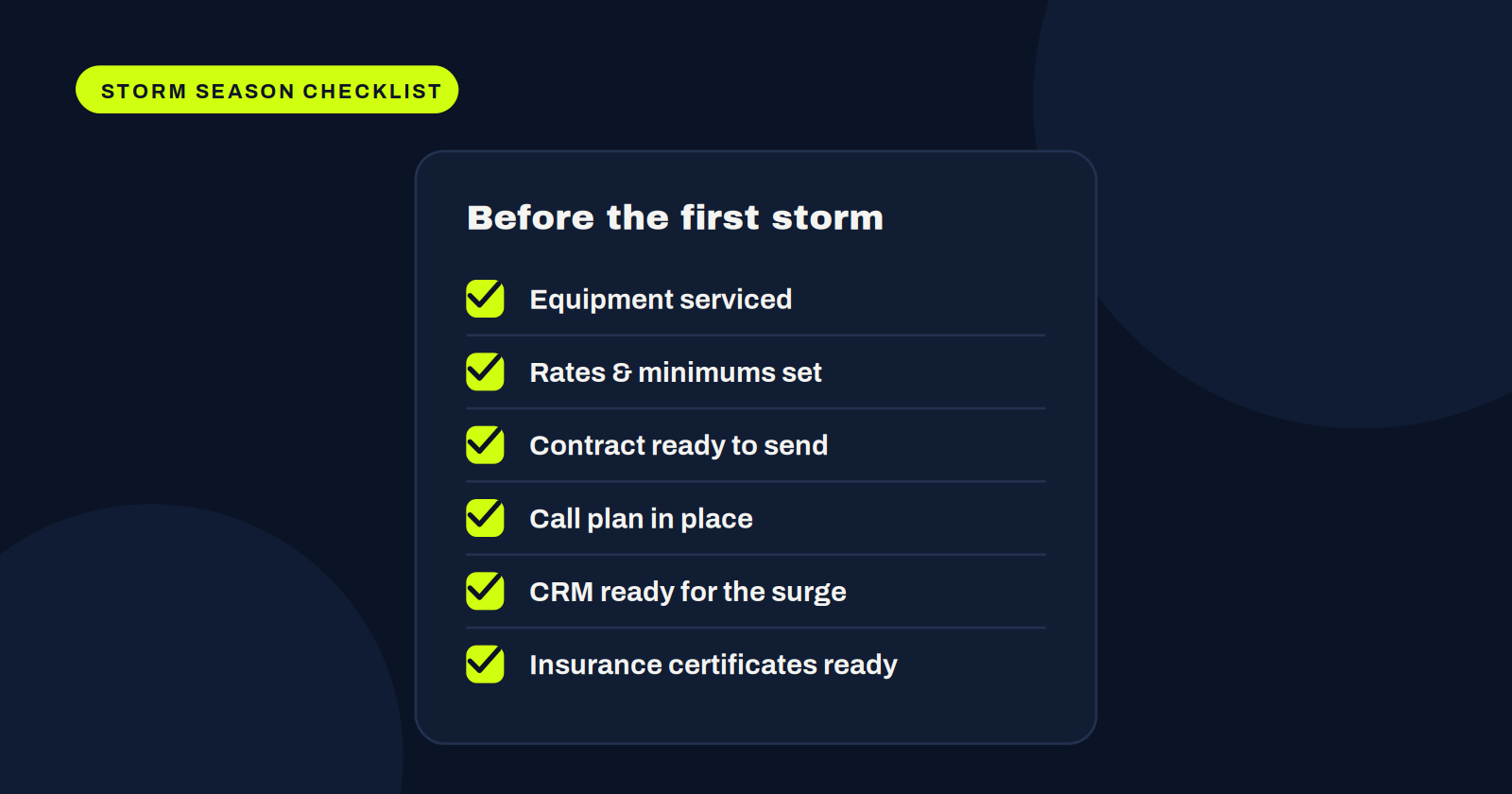
The first big storm of the season always tells you how ready you really were. The crews are usually fine. It’s everything around them that breaks: phones nobody can answer, prices nobody wrote down, and paperwork that piles up while the trucks sit waiting.
The short version
- Service equipment and set crew roles before the season
- Write down every rate and minimum ahead of time
- Have an attorney-reviewed contract ready to send
- Plan who handles the call surge
- Get your CRM and insurance paperwork ready
01Get your equipment and crews storm-ready
Service the saws, chippers, and trucks now, not the morning after the storm. Check your crane and bucket truck inspections, restock rigging, and make sure every crew knows who’s on call. Decide ahead of time who runs which truck when the calls start, so nobody is figuring it out in the driveway at 6 a.m.
02Lock in your pricing before you need it
Storm pricing done on the fly is where the most money gets lost. Before the season starts, write down an hourly rate for every piece of labor and equipment you run, plus the minimum you charge for each. Decide how you’ll charge for debris removal and confirm the sales tax rates for the areas you work.
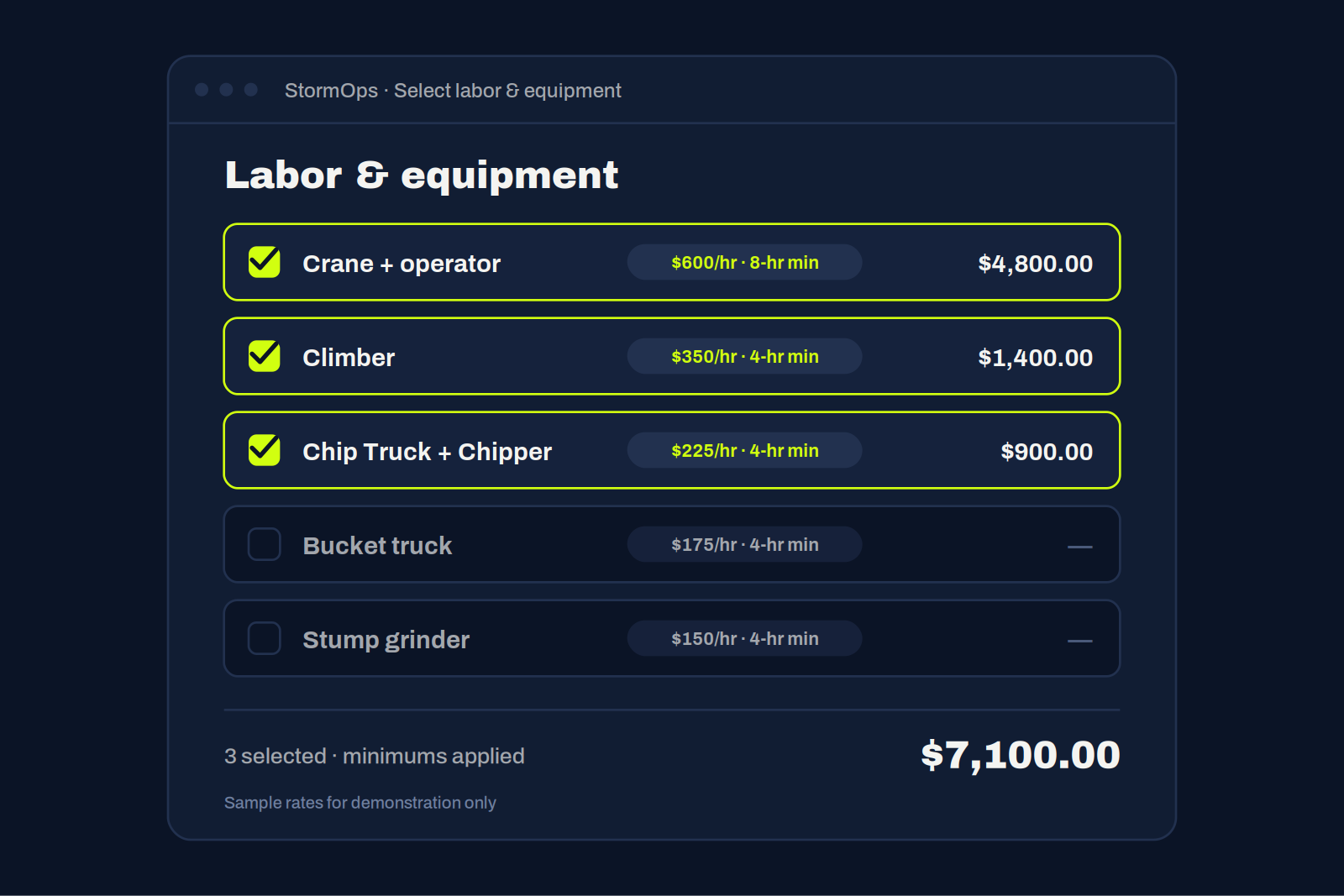
When the phones start ringing, nobody should be inventing prices.
03Have your contract ready to send
A signed contract before the crew starts is the best protection you have, especially on insurance jobs. Have your emergency service contract written, reviewed by your attorney, and ready to go out with every estimate. If a customer has to wait for paperwork, they’ll call the next company on the list.
04Plan for the call surge
Storm calls come in waves. Decide who answers the phone, what information they collect on every call, and how requests get to whoever is pricing jobs.
Pro tip
Get the customer’s name, phone, email, and property address on every single call. Anything you skip now becomes a callback later.
05Set up your office systems
Make sure your CRM is ready for a spike in new clients and jobs. The fewer times a job has to be typed in, the fewer mistakes get made when everyone is tired. If you use Jobber, plan how signed jobs will get into it quickly so dispatch isn’t waiting on data entry.
06Check your insurance and paperwork
Confirm your liability and workers’ comp coverage is current and that you can send certificates of insurance quickly. Homeowners, property managers, and insurance carriers will ask for them, and having them ready makes you look like the professional choice.
Be the company that’s ready.
StormOps™ sets up your rates and minimums ahead of time, so every emergency call becomes a priced, signed contract and a job in Jobber in minutes.