
When a storm hits, pricing is where emergency tree companies lose the most money. Not because the work isn’t worth it, but because jobs get priced in someone’s head, over the phone, while three other calls are waiting. Here’s a simple, repeatable way to price storm damage tree removal so every job covers your costs.
1. Price by the equipment and labor the job needs
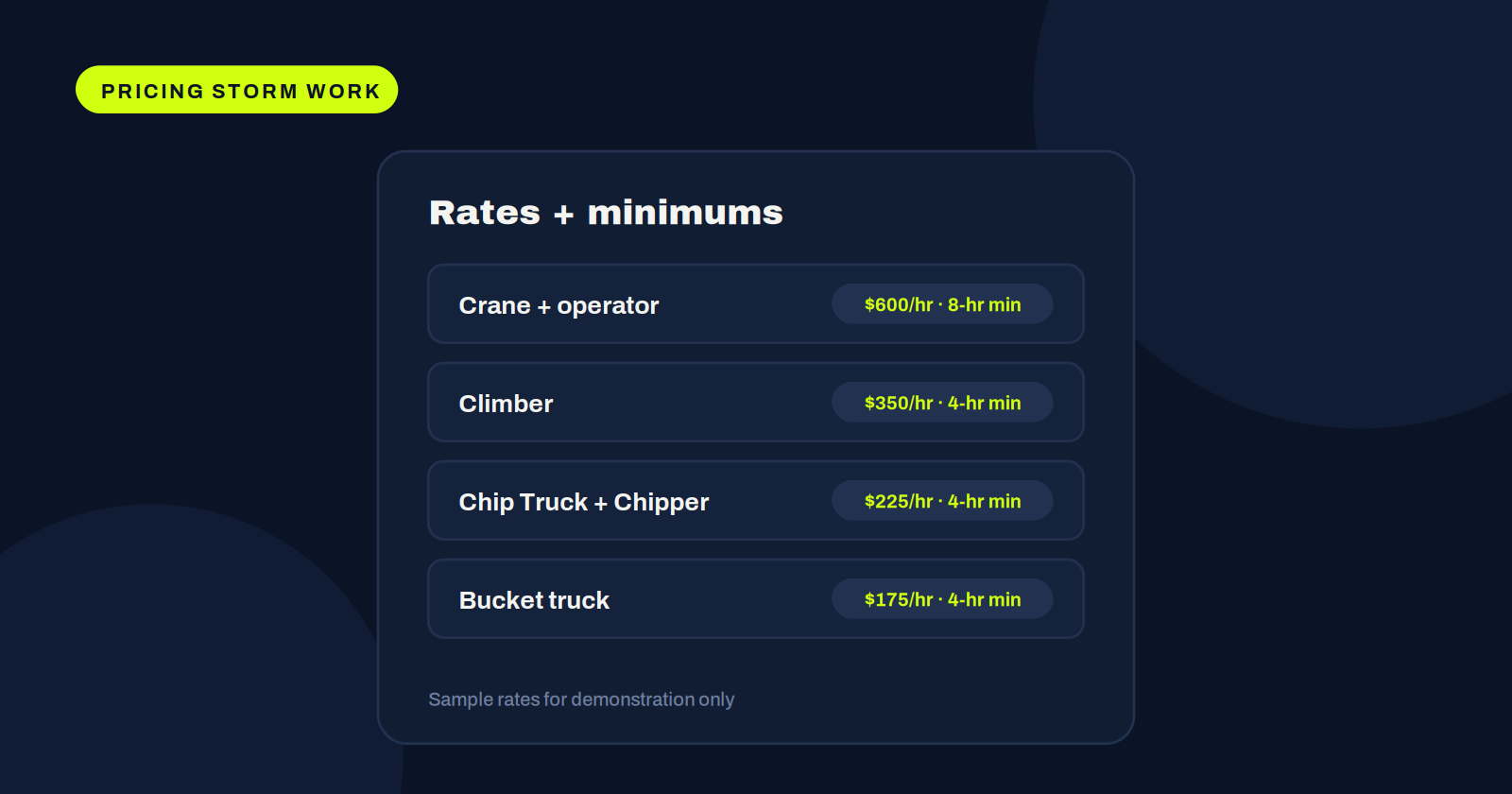
Storm jobs vary too much for a flat price. Instead, build the price from what the job requires: crane, bucket truck, climbers, ground crew, chipper, grapple, stump grinder. Each piece of labor and equipment should have its own hourly rate that covers the true cost to run it, including fuel, insurance, maintenance, and the operator.
2. Set minimums and stick to them
Mobilizing a crane or a full crew costs the same whether the job takes one hour or four. Minimums, like a 4-hour or 8-hour minimum depending on the equipment, protect you from losing money on short jobs. The key is applying them every time, no matter who answers the phone.
3. Don’t forget debris removal
Hauling and disposing of storm debris is real work with real costs. Many companies charge debris removal as a percentage of the job so it scales with the size of the work. Whatever method you use, list it as its own line so the customer sees exactly what it covers.
4. Add the right sales tax
Sales tax rules and rates vary by state and even by county. Make sure you know what applies to your work and where you’re working, and add it clearly to the estimate. Your accountant can confirm what’s taxable in your area.
5. Show the all-in total and get it signed before work starts
Customers in a crisis want to know one thing: what will this cost? Show every charge, the minimums, debris, tax, and the total in one place, then get a signed contract before the crew starts cutting. A signed contract protects your company and cuts down on disputes later, including with insurance carriers.
Make it the same process every time
The companies that do best in storm season price every job the same way, fast. That’s exactly why we built StormOps™: pick the equipment, and your rates, minimums, debris charge, and tax are calculated automatically, then sent to the customer as a contract to sign.